



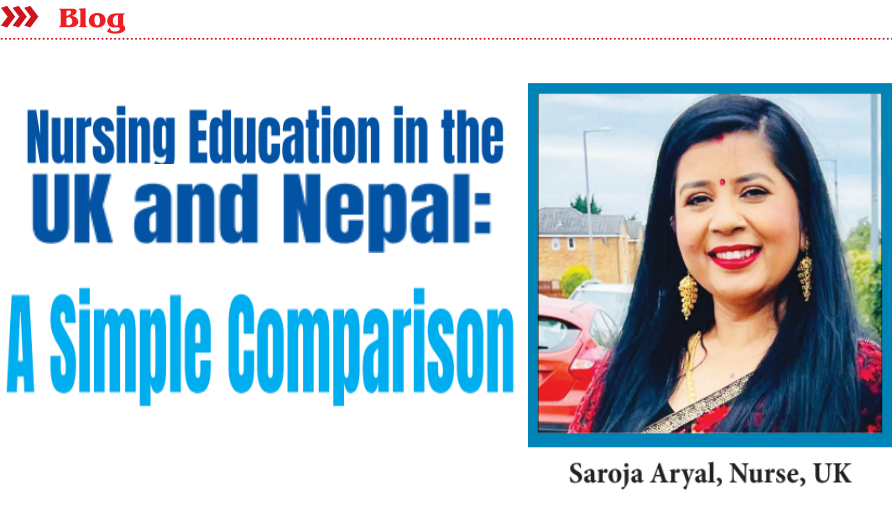
Nursing Education in the UK and Nepal: A Simple Comparison
Nursing is one of the most respected professions worldwide. In the United Kingdom (UK), the demand for qualified nurses is especially high, which is why many Nepali students aspire to study and work there. However, the approach to nursing education and practice in the UK differs significantly from that in Nepal. Understanding these differences can help students prepare more effectively for their future careers.


Nursing in the UK
In the UK, most students study Bachelor of Science in Nursing (BSc Nursing), which usually takes three to four years to complete. To get into this course, you need to finish +2 in Science or Health Science. English is really important - almost every university asks for IELTS score of 7.0 overall, with no less than 6.5 in each band. Along with that, you'll also need documents like a health check, tuberculosis (TB) test, police clearance, recommendation letters and a personal statement.
One big difference between the teaching is that the approach is highly practical in the UK. In conjunction with learning in the classroom, nursing students are exposed to working at real hospitals within the National Health Service (NHS). From second year onwards, students begin clinical placements, working directly with patients. This hands-on experience not only strengthens their skills but also builds confidence for their professional careers.
Nursing in Nepal
In Nepal, students can choose between Proficiency Certificate Level (PCL) Nursing, commonly known as Staff Nurse training, which takes three years, or a Bachelor of Science in Nursing (BSc Nursing), which takes four years. The emphasis in Nepal is mostly on theory and classroom learning. Although students do receive practical training in hospitals, many institutions face challenges due to limited equipment and resources.
After completing their studies, graduates must register with the Nepal Nursing Council (NNC) in order to practice as professional nurses.
Summary of key differences between UK and Nepal
There are several major differences between how nursing is taught and practiced between the two countries.
• Course Duration - In Nepal, students can pursue PCL Nursing (3 years) or BSc Nursing (4 years). In the UK, the standard program is BSc Nursing, 3 years for a standard BSc or four years for BSc with Honours.
• Teaching Approach - Nursing education in Nepal is more theory-based, whereas in the UK there is a stronger emphasis on practical learning, research and self-study.
• Training Environment - In Nepal, practical training is carried out in local hospitals that often have limited resources. In contrast, UK students train in NHS hospitals equipped with advanced technology.
• Professional Registration - After graduation, nurses in Nepal must register with the Nepal Nursing Council (NNC), while in the UK, nurses register with the Nursing and Midwifery Council (NMC).
• Salary - The pay scale is significantly different. In Nepal, nurses typically earn Rs. 25,000-50,000 per month. In the UK, nurses earn about £28,000-£34,000 per year, which is roughly £2,300-2,800 or NRs. 4-5 lakh per month.
Challenges for Nepali Students
Studying nursing in the UK comes with amazing opportunities, but it's not without challenges. The cost is quite high, tuition can be around £14,000-£20,000 a year, plus living expenses. English can also be tough, as you need to be confident in reading, writing and speaking.
On top of that, adapting to a new culture and a different style of education can take time. The UK focuses a lot on practical work, self-study, and independent thinking, which is very different from the mostly classroom-based approach in Nepal. At first, it can feel overwhelming, but once you settle in, it becomes an incredible learning experience.
Conclusion
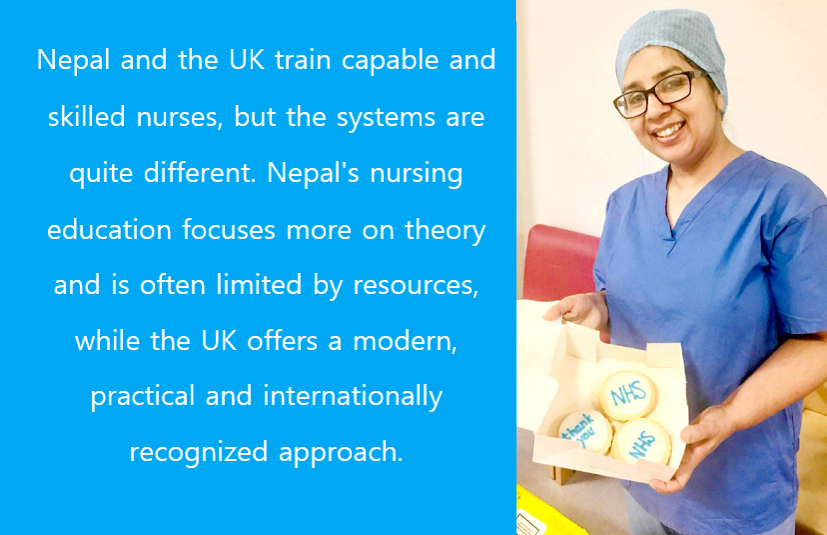
Both Nepal and the UK train capable and skilled nurses, but the systems are quite different. Nepal's nursing education focuses more on theory and is often limited by resources, while the UK offers a modern, practical and internationally recognized approach.
For Nepali students who are willing to handle the costs, improve their English, and adapt to a new environment, pursuing Nursing in the UK can be a life-changing opportunity, offering better pay, valuable experience, and a brighter career path.
(Saroja Aryal is a Senior Nurse and Theatre Practitioner at Glasgow Royal Infirmary with 30+ years’ experience in nursing, theatre practice, elderly care, and community health, actively leading Nepalese nursing associations.)





..jpeg)






प्रतिकृया दिनुहोस